The Making of “Farm to Table”: Prepping
It was a painting I’m sure I’ll never forget, in bright oranges, reds and purples; my first to go in front of a jury; a privilege I paid for with both my hard-earned cash and my ego. While I tempered my hopes the work of an ingénue would be invited into this group watercolor exhibition, my pride bruised black and blue when my piece received a polite pass. Few vulnerability hangovers are more painful than supplying an unrequited answer to a call for art.
Feeling a bit conflicted, I confided in my art instructor. She wasn’t surprised; she knew both my work with its bent toward the abstract and the gallery with its affinity for realism. The two were not going to be a match. While I felt better about the outcome, I still wrestled with my integrity as an artist, wondering, can I stay the course making the art I’m called to or will I succumb to the pressure to conform?
The preparation work that goes into making source materials for collages is about variety and abundance. Many, many paintings are made. Some start with the intent to depict the composition and will serve as base paintings to build a collage upon. Others are pure patterns and textures to create interest and balance. While I’m always striving for the painting that is immediately so precious it would break my heart to dismantle it for a collage, at this phase I expect that none of the paintings will stand on their own. Instead, they are awash in contradictions. Bleeds that run fabulous swimming in just the right amount of water amid puddles of settling washes, ebbing dry into a spidery shoreline at low tide. Smooth, silky, multi-color washes blending seamlessly alongside muddy collisions, one color overtaking the shape of another.
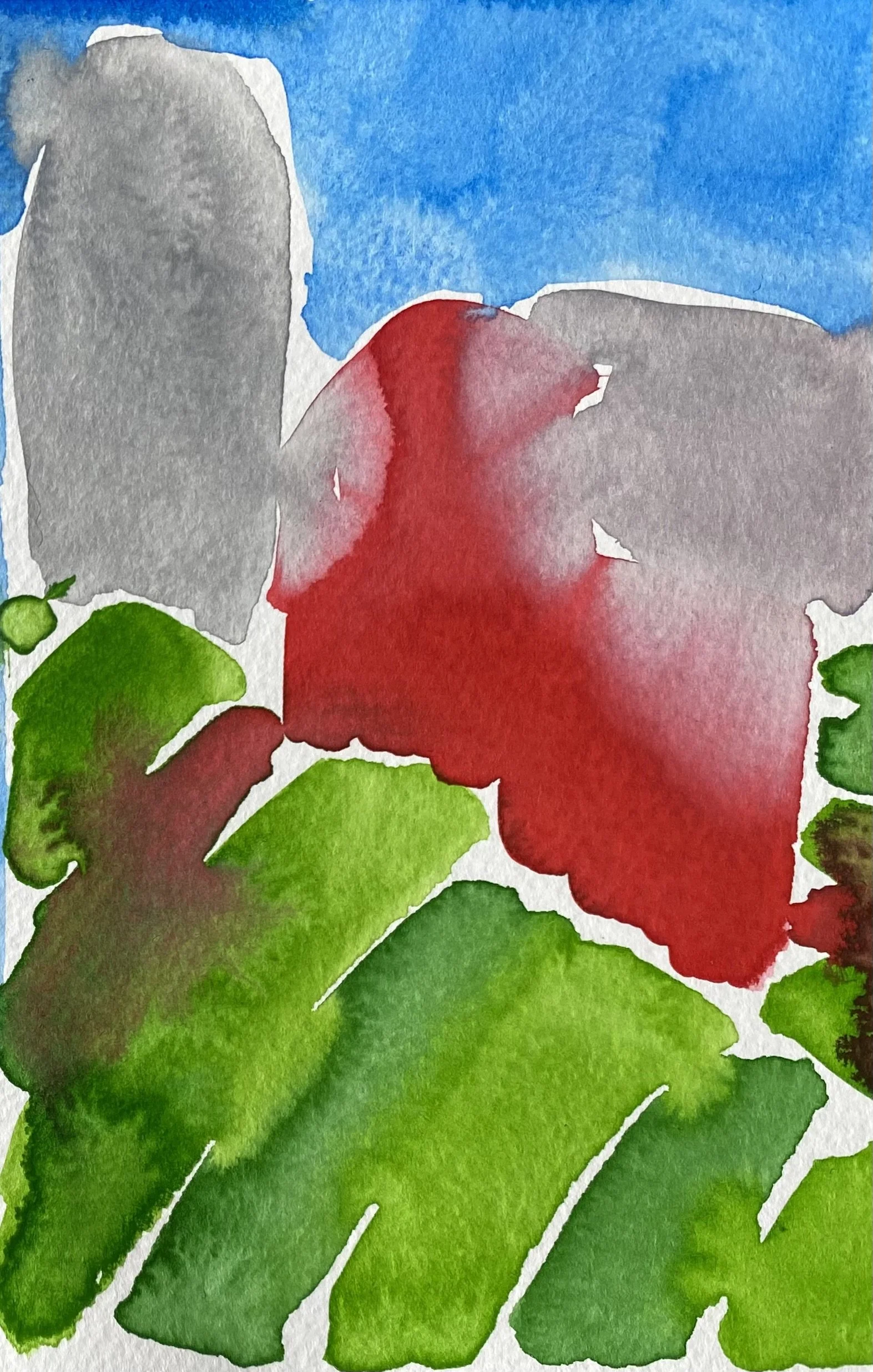
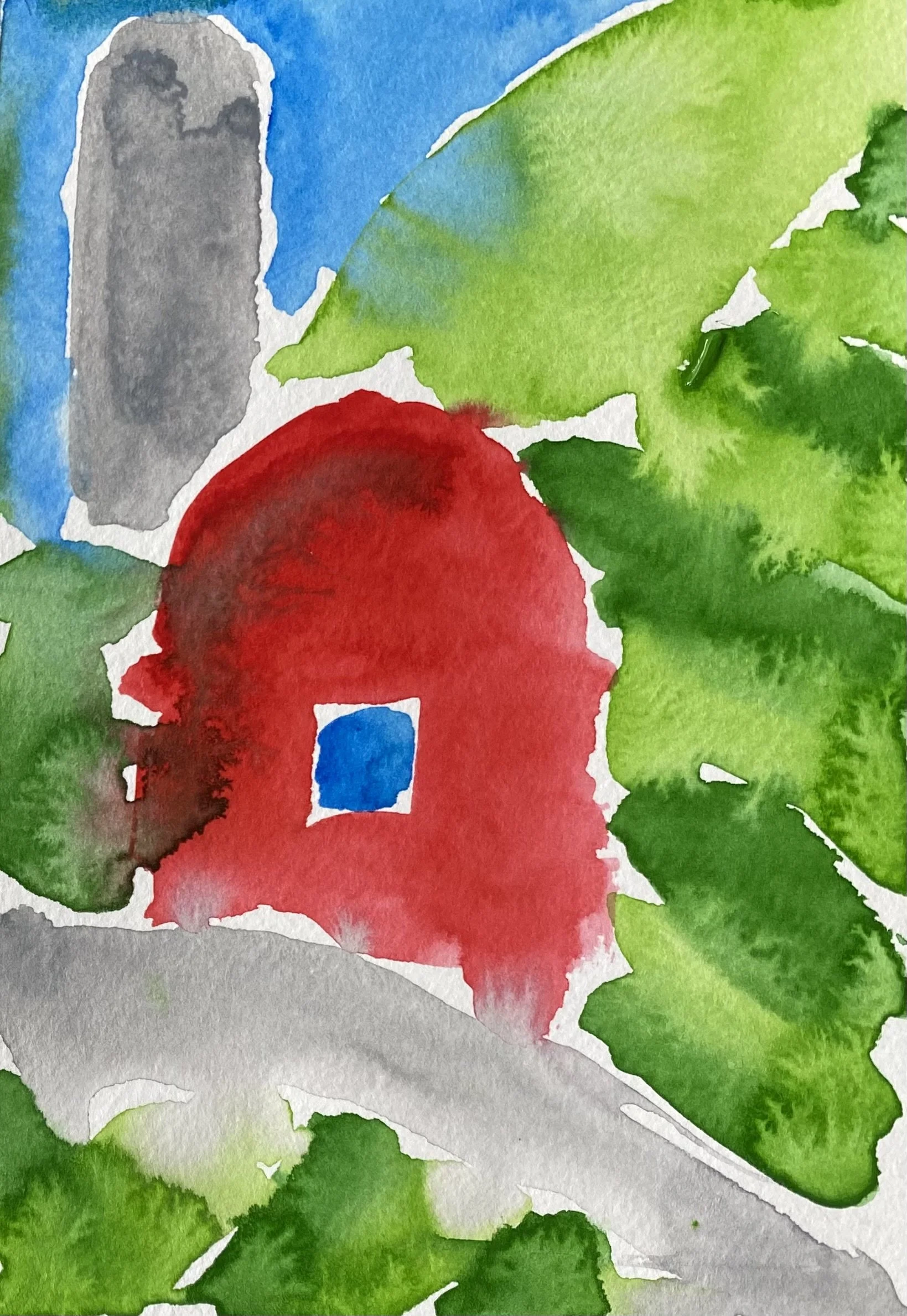
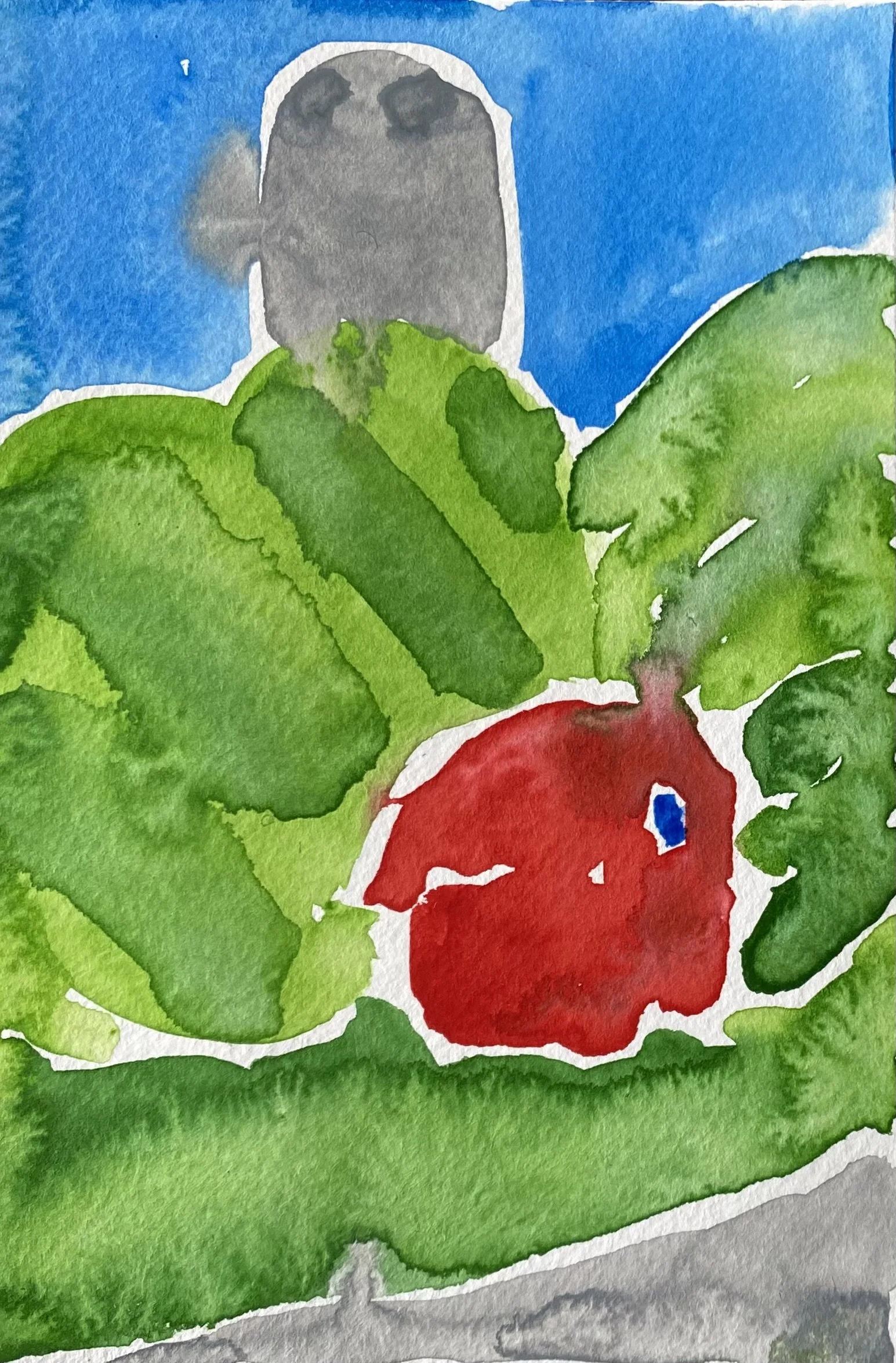
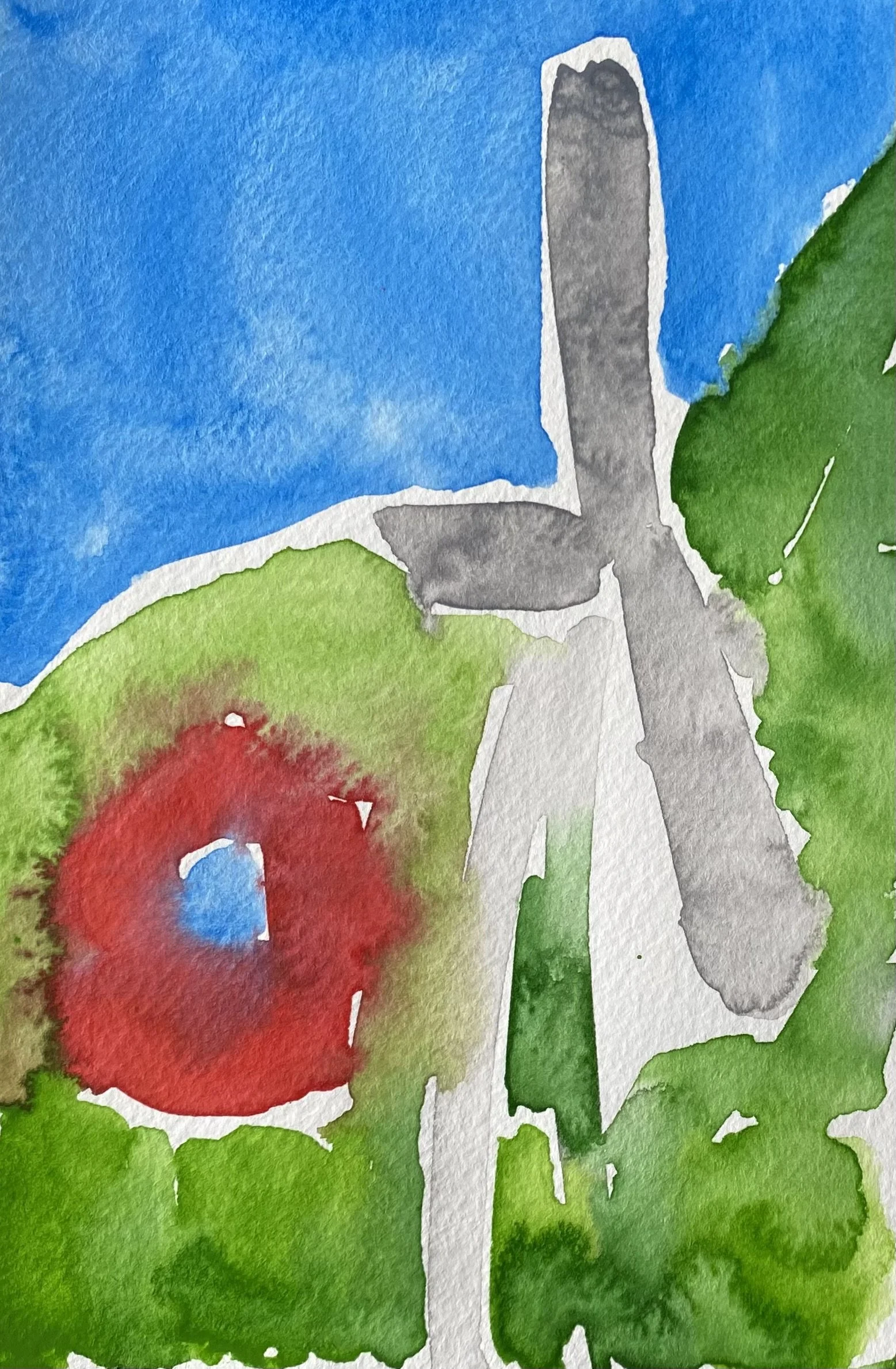
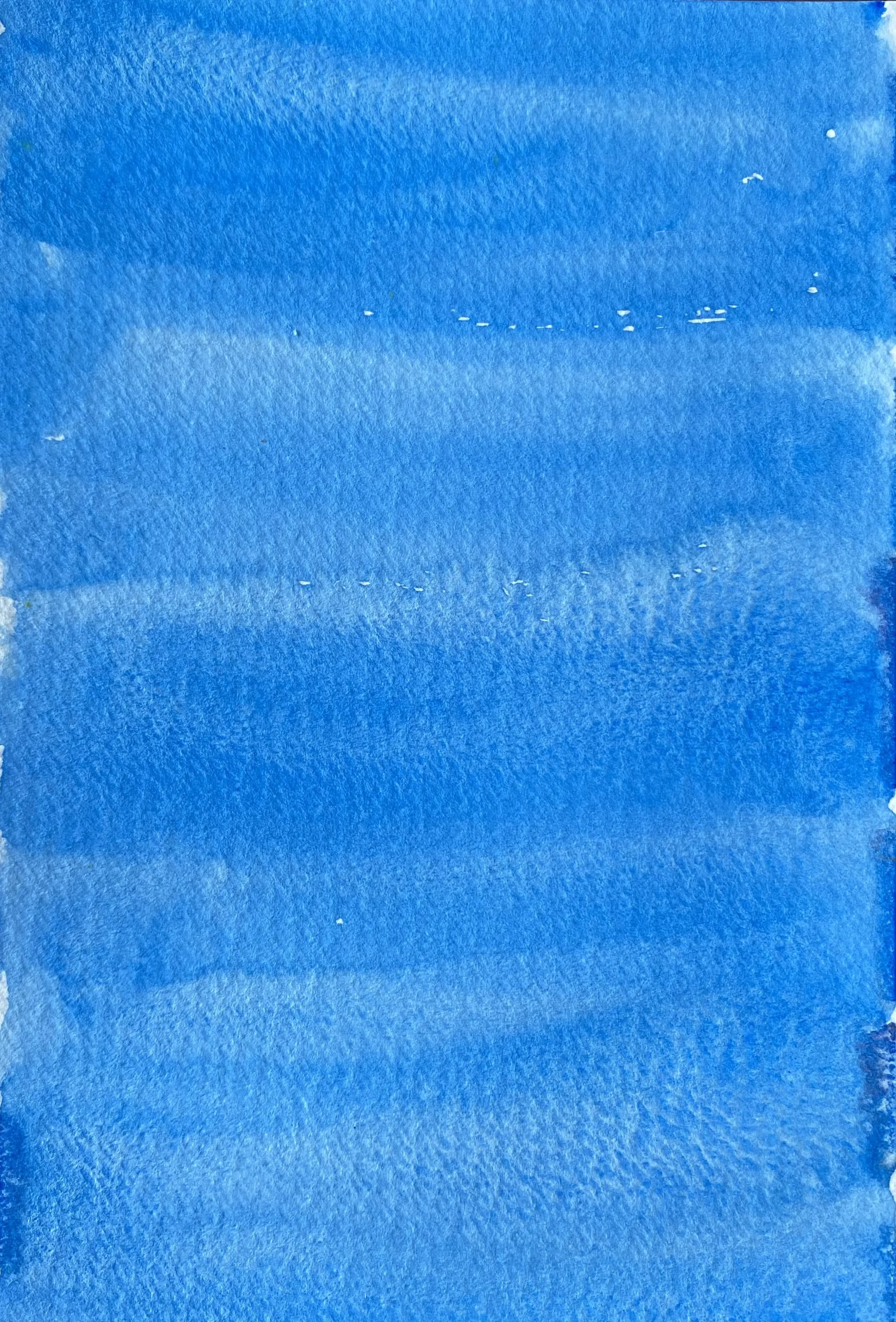
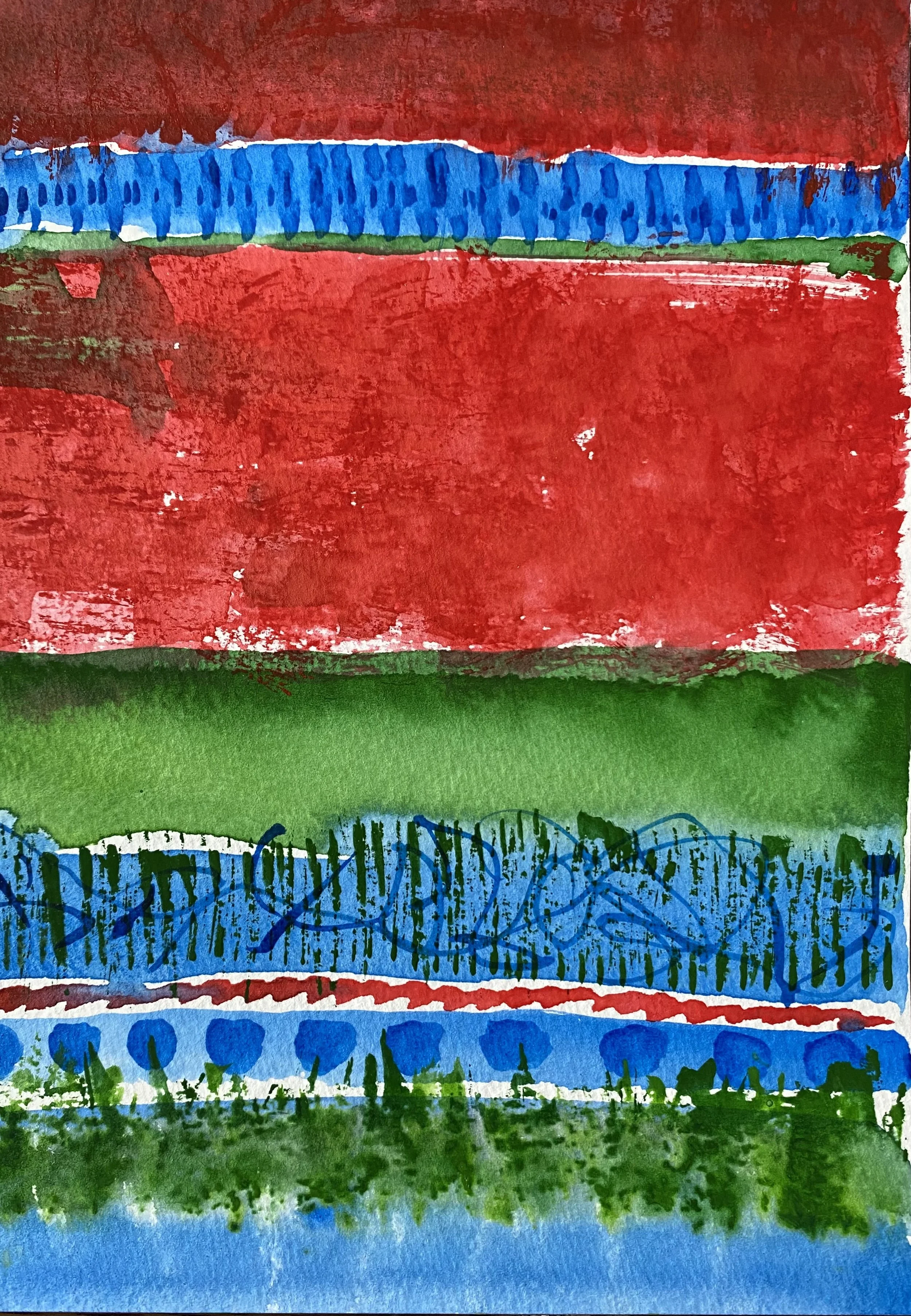
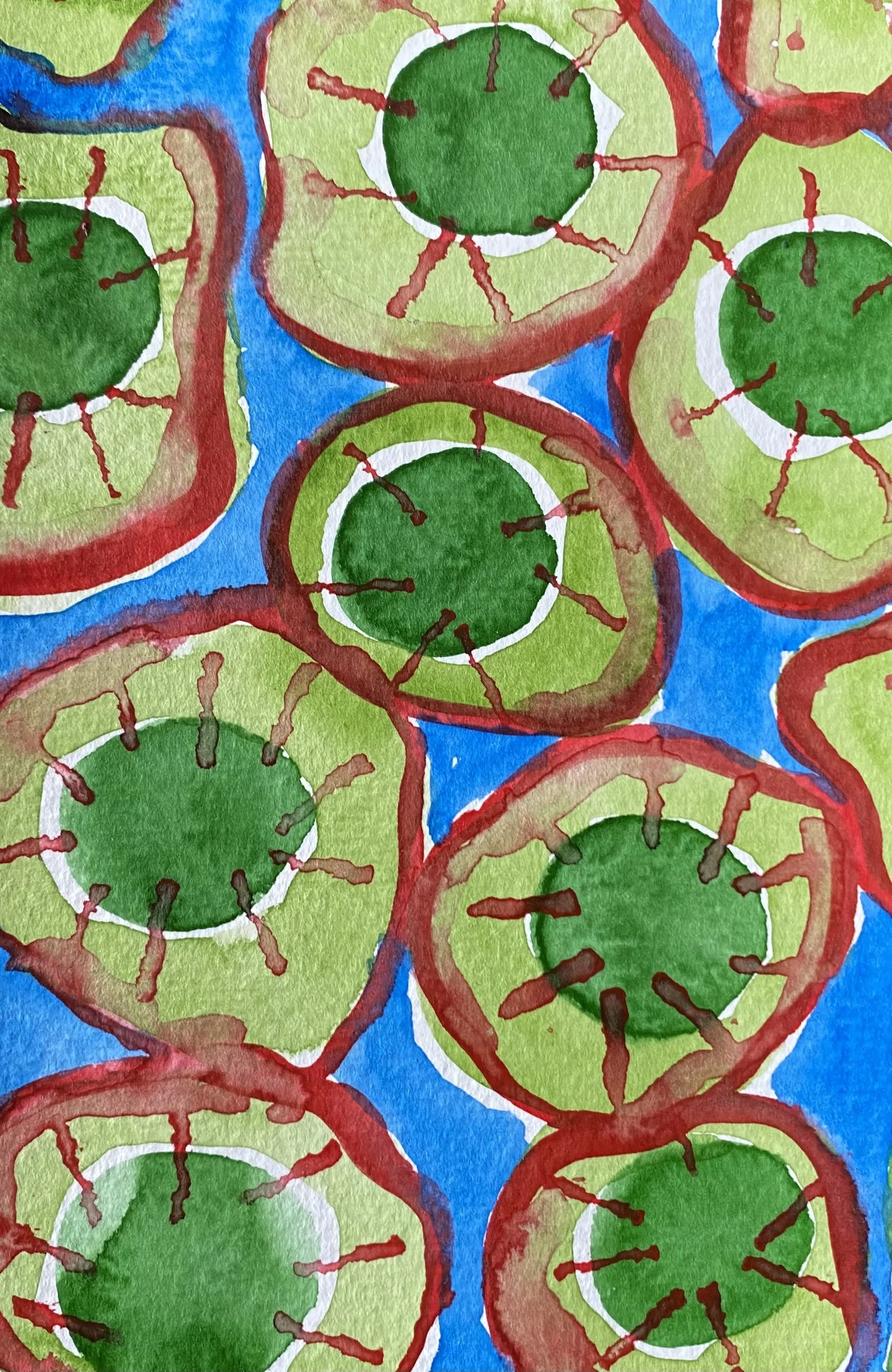
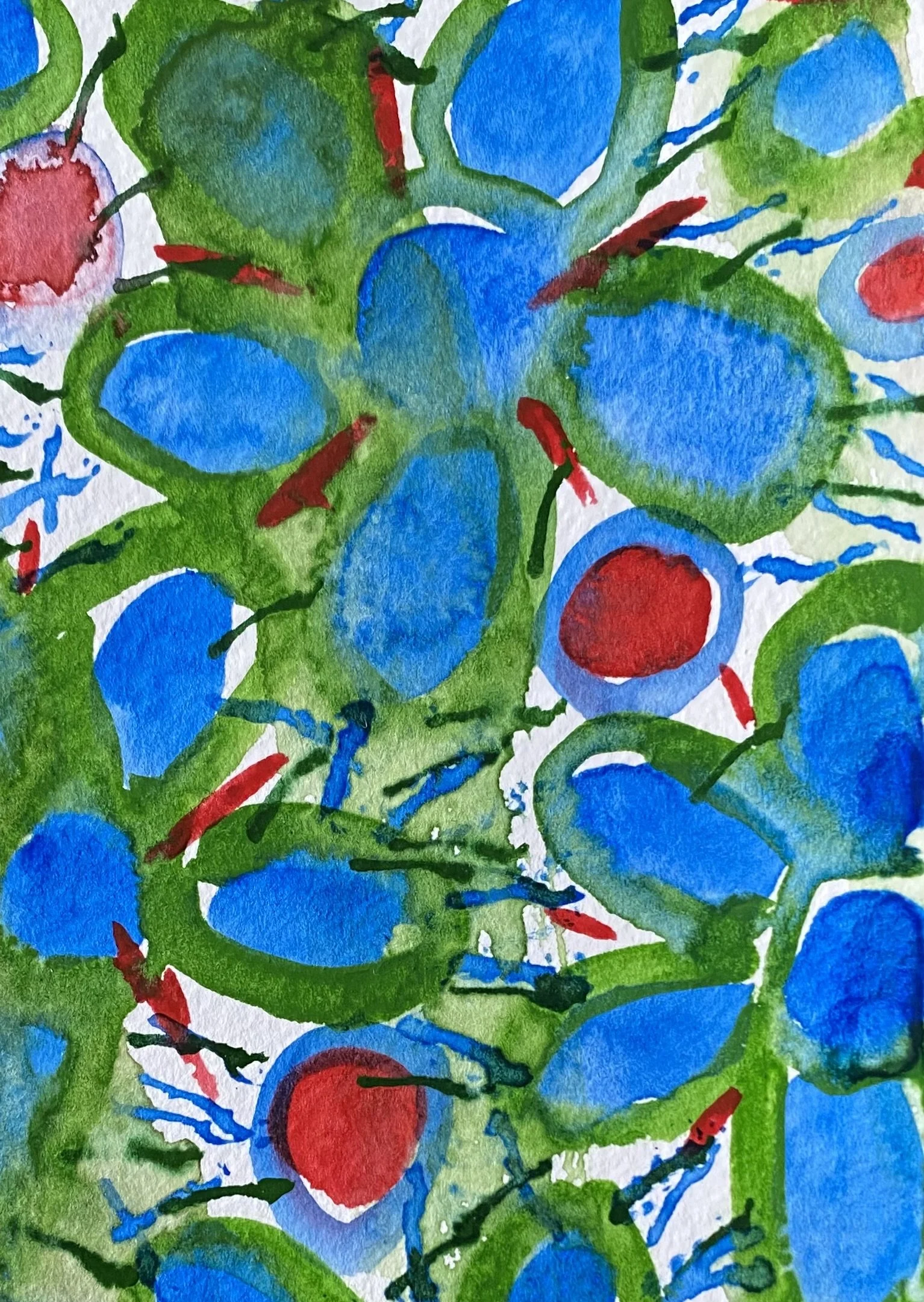
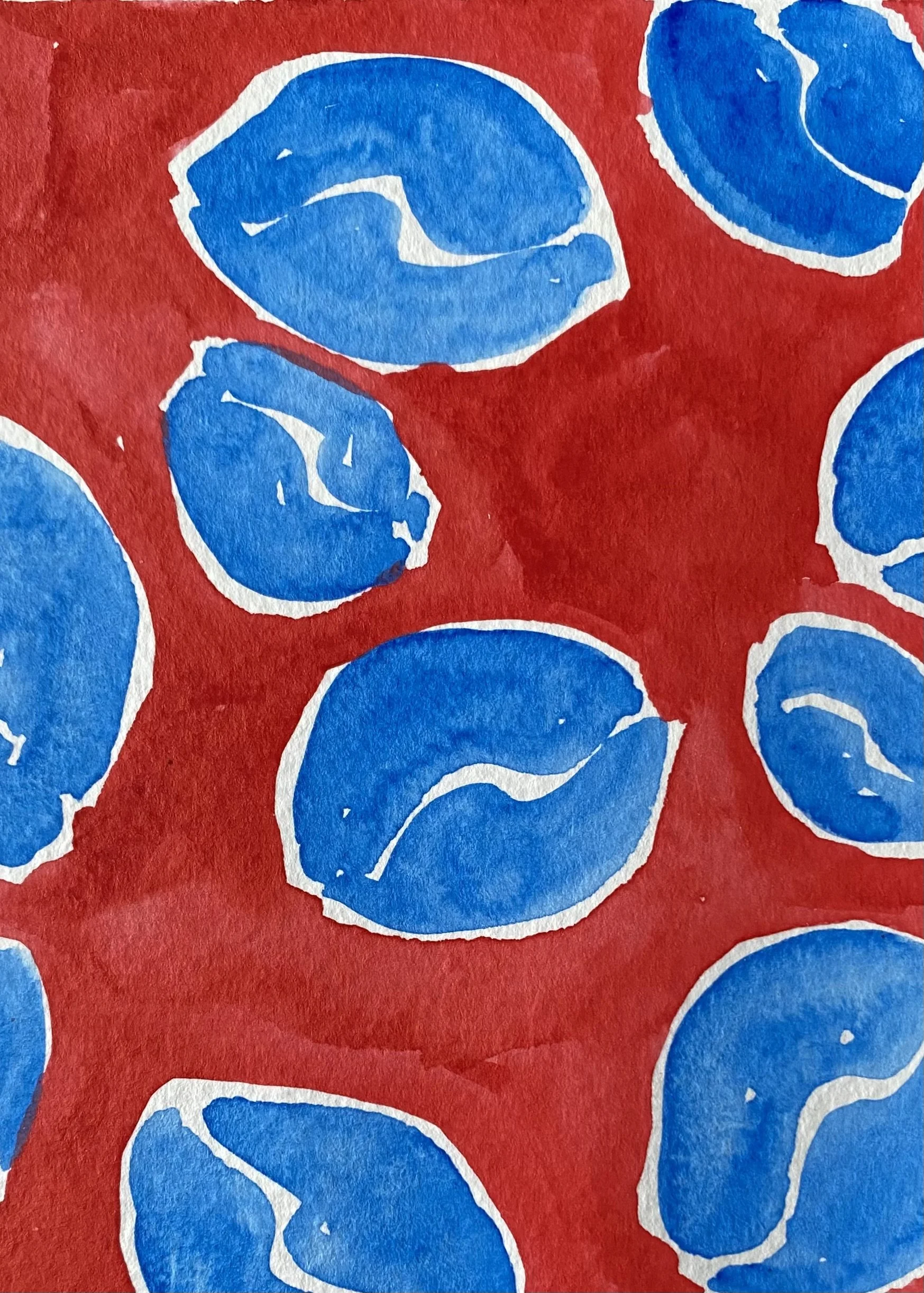
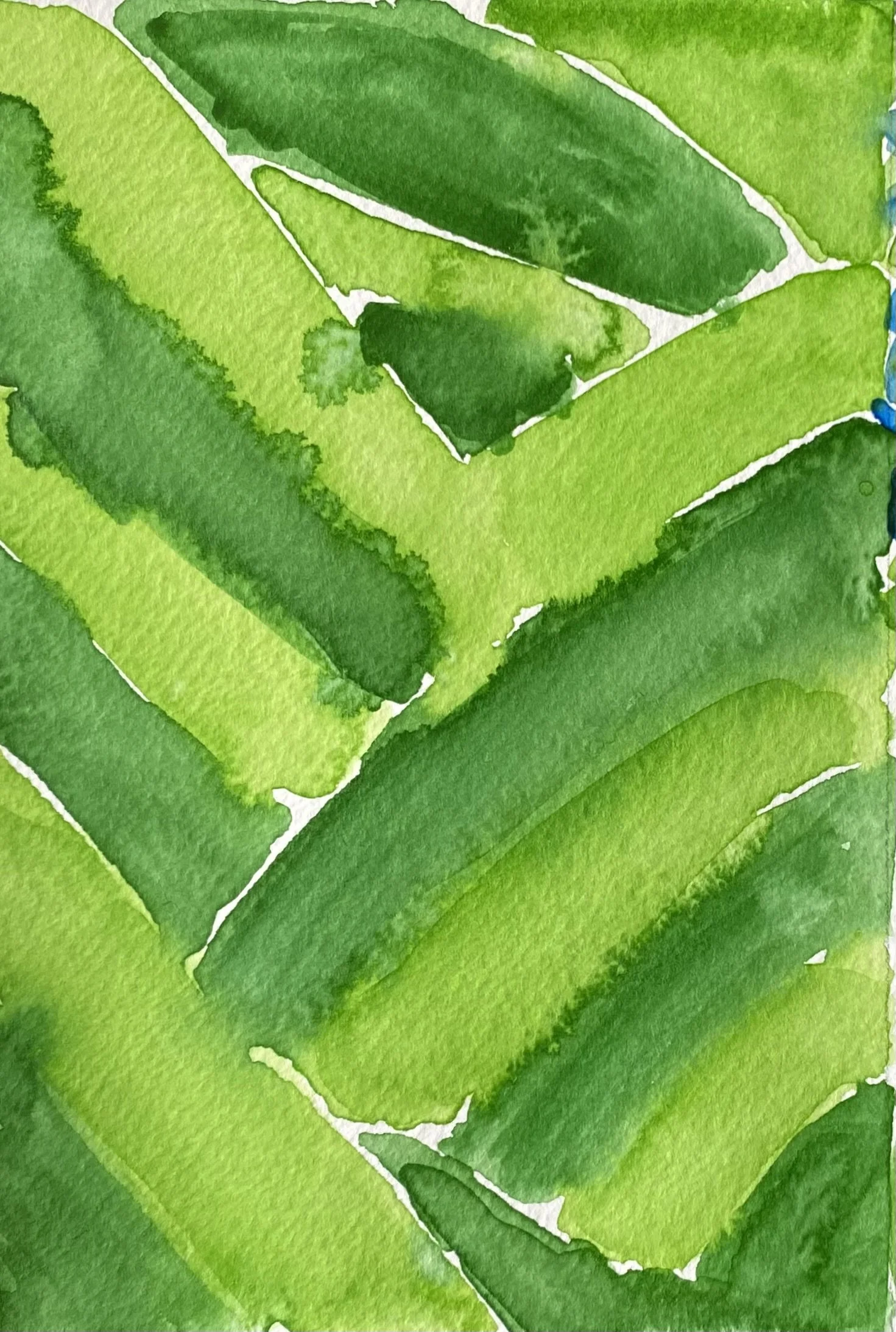
Every stage in my process yields work that I deem not good enough; a range of thumbnail drawings winnowed into charcoal and watercolor studies that glean the finished work. It’s no different when painting source material. I like to have a lot of options to work with, and I like to explore a variety of painting techniques and subject matter. Not all the experiments are successful. While it’s tempting to start a discard pile, I’ve learned restraint, teaching myself to suffer the misfits, never throwing anything out. I won’t know what paintings will be right for a particular collage until I’m actually making it. It’s not unheard of for source material to make its way, years later, into a collage series it wasn’t created for. A painting that just doesn’t seem right for the work at hand can be the exact right painting for a completely different project.
At times I consider tailoring the source materials I’m making to what I think a collage will ask for in an attempt to shape the outcome. But it’s a dangerous and limiting process, this deciding what the piece is before it’s born, forcing the work to conform rather than letting it unfold organically. I’ve learned my best work comes when I can be open to wherever the making takes me, letting my paintings find their place in the right collage.
To consider changing what I make in hopes of delivering the right answer to a call for art is to ask myself if in doing so I’d be giving up some of the magic that makes my art unique to me. Could I still make with joy and abandon, or would I feel controlled or constrained? Just as collages call for the right source material, so does a gallery call for the right art. Yes, making work to fit a specific call is an option, but it likely feels better to seek out calls asking for the work I make.