The Making of “Farm to Table”: Culling
In the analog era of photography, I waited impatiently for rolls of 35MM film to be developed, crossing my fingers the shots would be good. I painstakingly documented the people, places and dates on the back of each photo and shimmied glossy prints into the thin plastic sleeves of album pages all in the name of being able to open the book at some later date, flip through and recall the fun and beauty of a vacation.
Prints were precious. There was no opportunity in the moment to have a look at the work, decide whether it was pleasing, and snap another if needed. We accepted the best of a mediocre lot because it was all we had; we lived with and learned from the disappointment when the shots that seemed so promising through the viewfinder didn’t pan out. It’s here I suspect my practice of seeking something beautiful in almost every photograph was birthed, making it perennially impossible to part with all but the worst blurry or unrecognizable images.
The camera phone and its portability have done away with this cumbersome process, taking preciousness with it. The number of photos I take has increased exponentially, creating a new storage nightmare cast with thousands of slightly imperfect extras littering the cutting room floor, waiting to be swept into a digital trash can my poor camera roll management leaves perpetually empty.
It’s a good thing more is more in art. This philosophy tempers preciousness to promote learning. If I make multiple iterations of the subject, I’m more inclined to experiment to the point of overworking a piece because I know I have others I can leave intact. Of course, this excess also means more to choose from. I filled up yet another 100-page sketchbook at the end of the year. While I haven’t counted, it likely equates to 1000+ tiny drawings, roughly 50 of which were made for “Farm to Table”.
The thumbnail sketches are scoured to glean those most promising for translation to larger scale paintings. This selection process ebbs and flows; the first cut focuses on the outliers, stripping away the obvious misfires and shining a spotlight on the immediately spectacular. A second look weeds out what’s too complicated or not interesting enough. I’ll make some preliminary picks, put the sketchbook away for a while, come back and choose one or two more. The images I keep returning to are the ones I settle on. For this series, six compositions moved forward.
Moving forward means making studies to test a drawing’s merits in paint. By the time I get to the collage stage I want to be reasonably certain the finished pieces will be successful. Studies are meant to be an efficient, exploratory process to suss out the feasibility of making a favorable painting from what looks good in pen on paper.
Studies can happen en plein air (working outdoors, in front of my subject), in studio, or both. All the studies for this series were made in studio. Using the drawings in my sketchbook as a guide, the compositions are fleshed out on watercolor paper in charcoal lines, often with my non-dominant hand. Known as opposite-hand drawing, it’s a famous art class warm-up exercise to encourage making loose lines. The marks on the paper are put down quickly and are often stilted before finding a groove. By adding watercolor over the charcoal, I can test the color palette at the same time. The partnering of these two materials for studies makes for chaotic, fast and rewarding work. Loose lines and spontaneous paint bleeds bring a wonky charm to this gauzy, soft-gaze style that personifies its purpose.
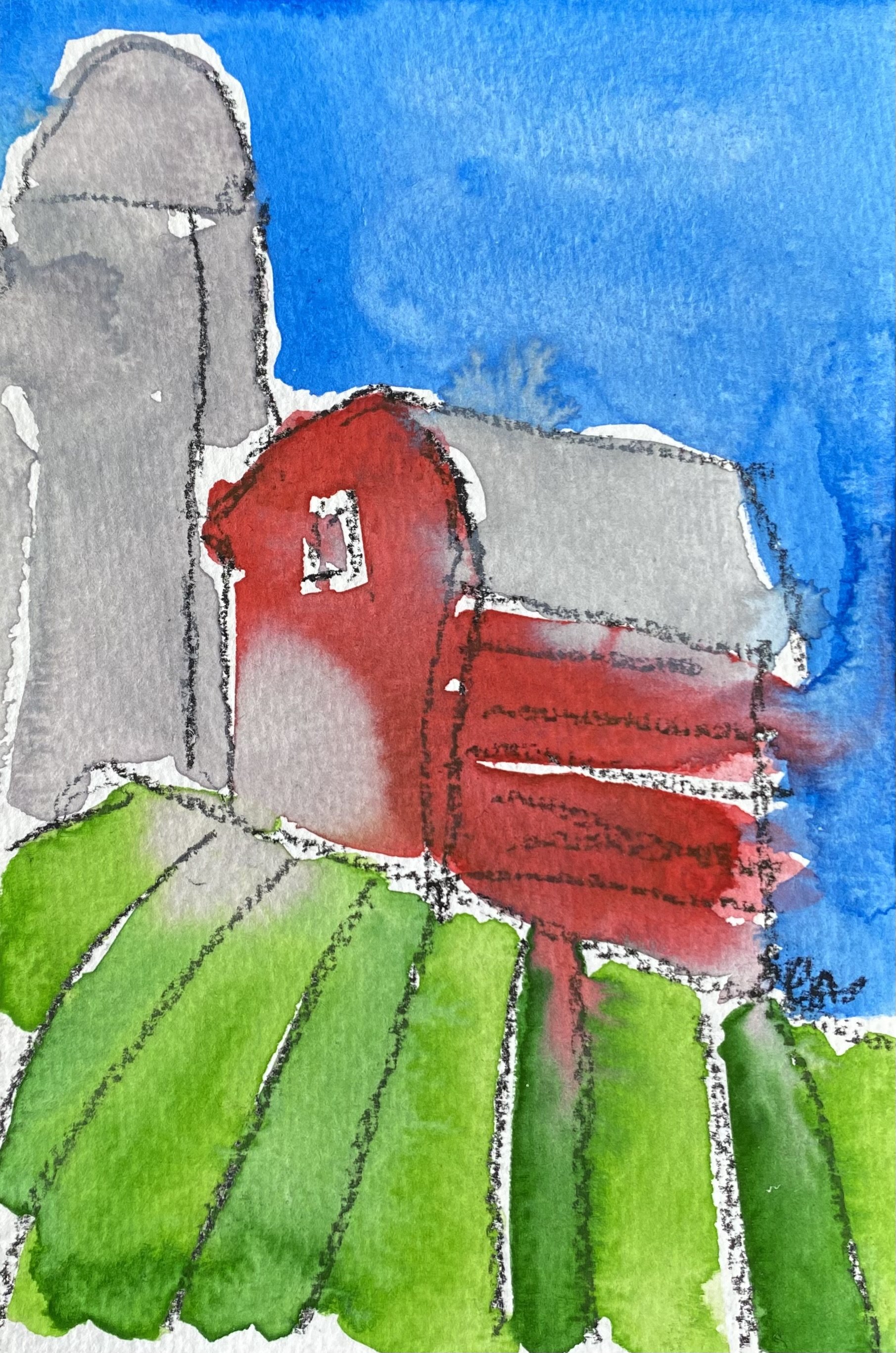
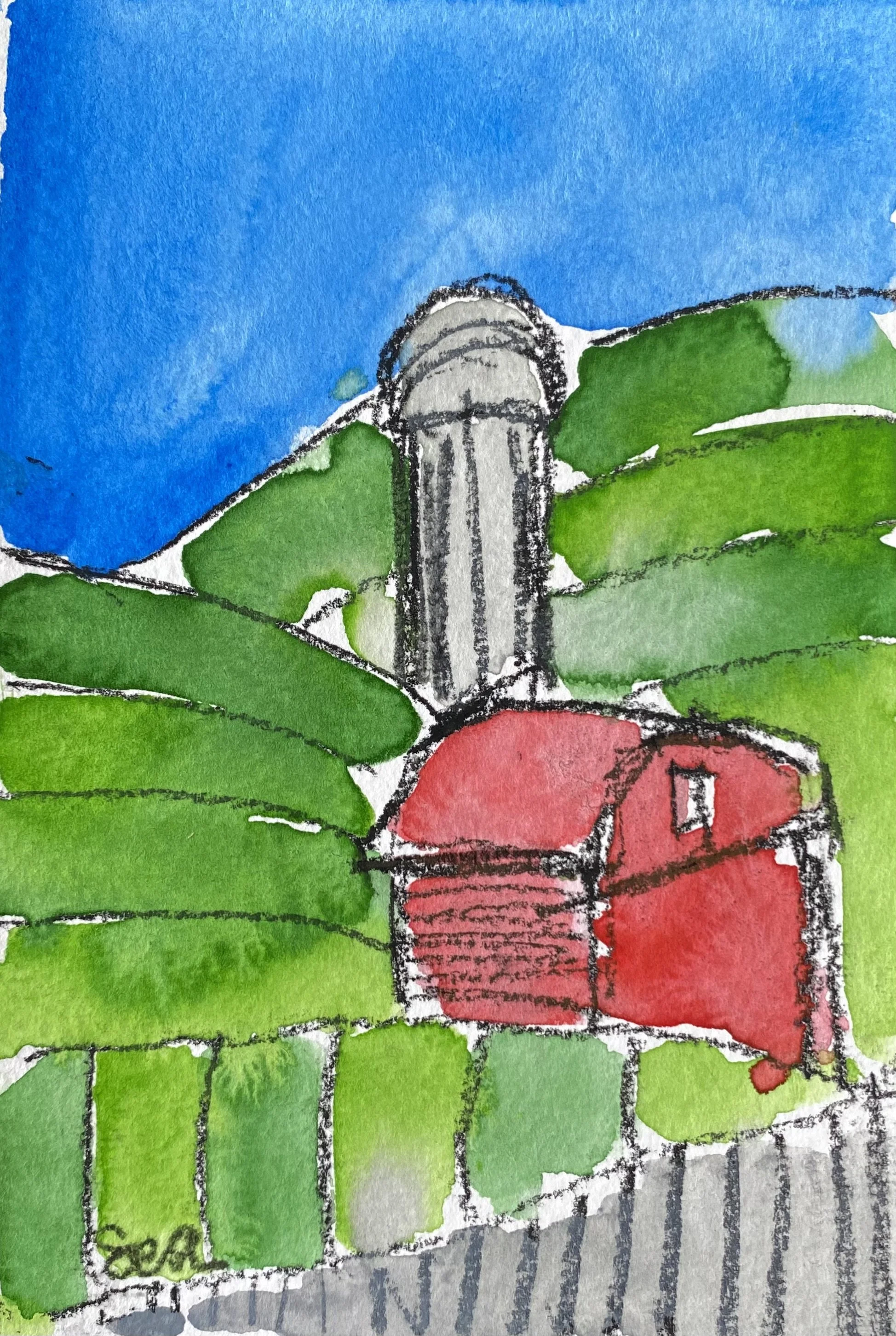
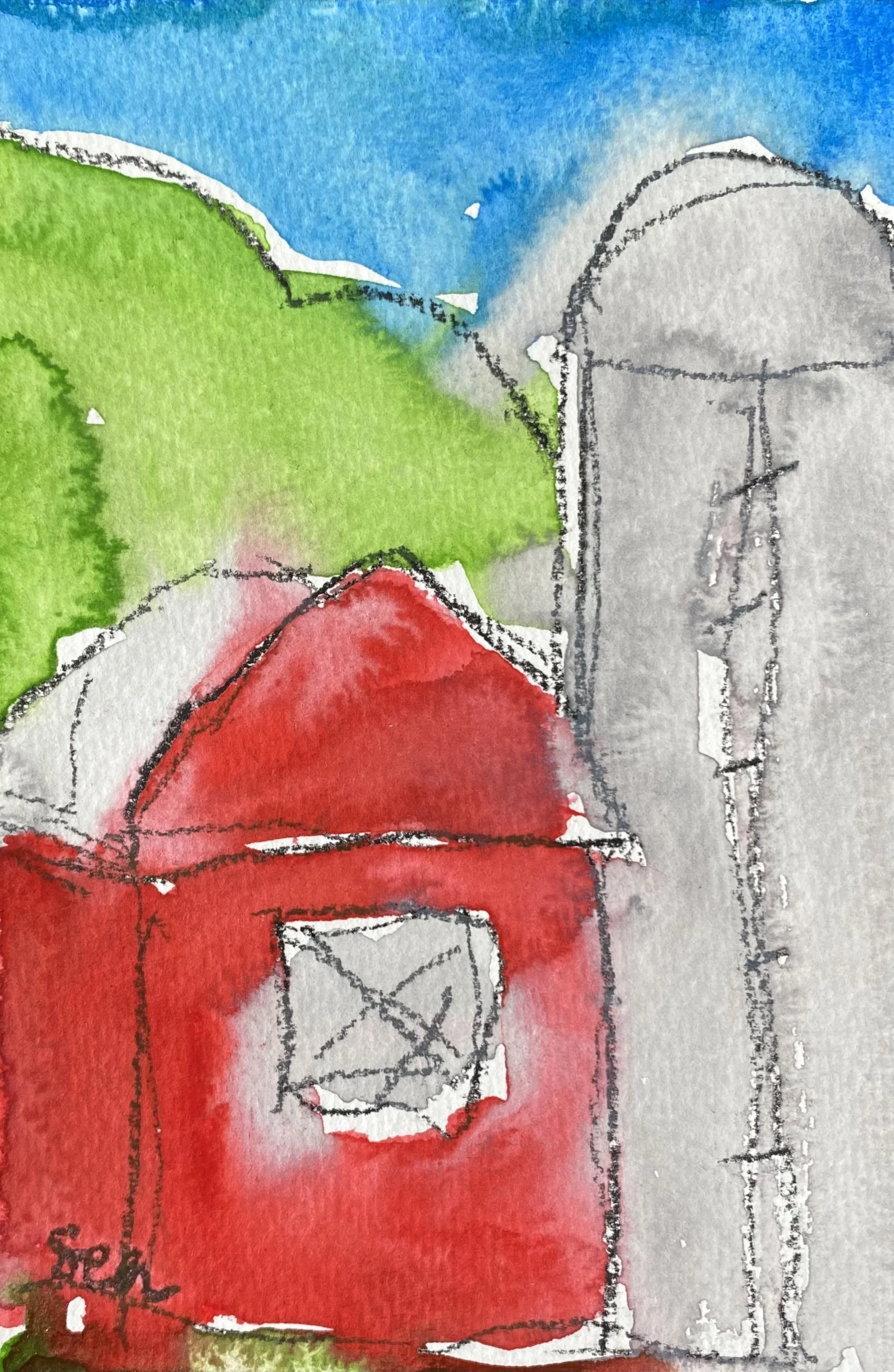
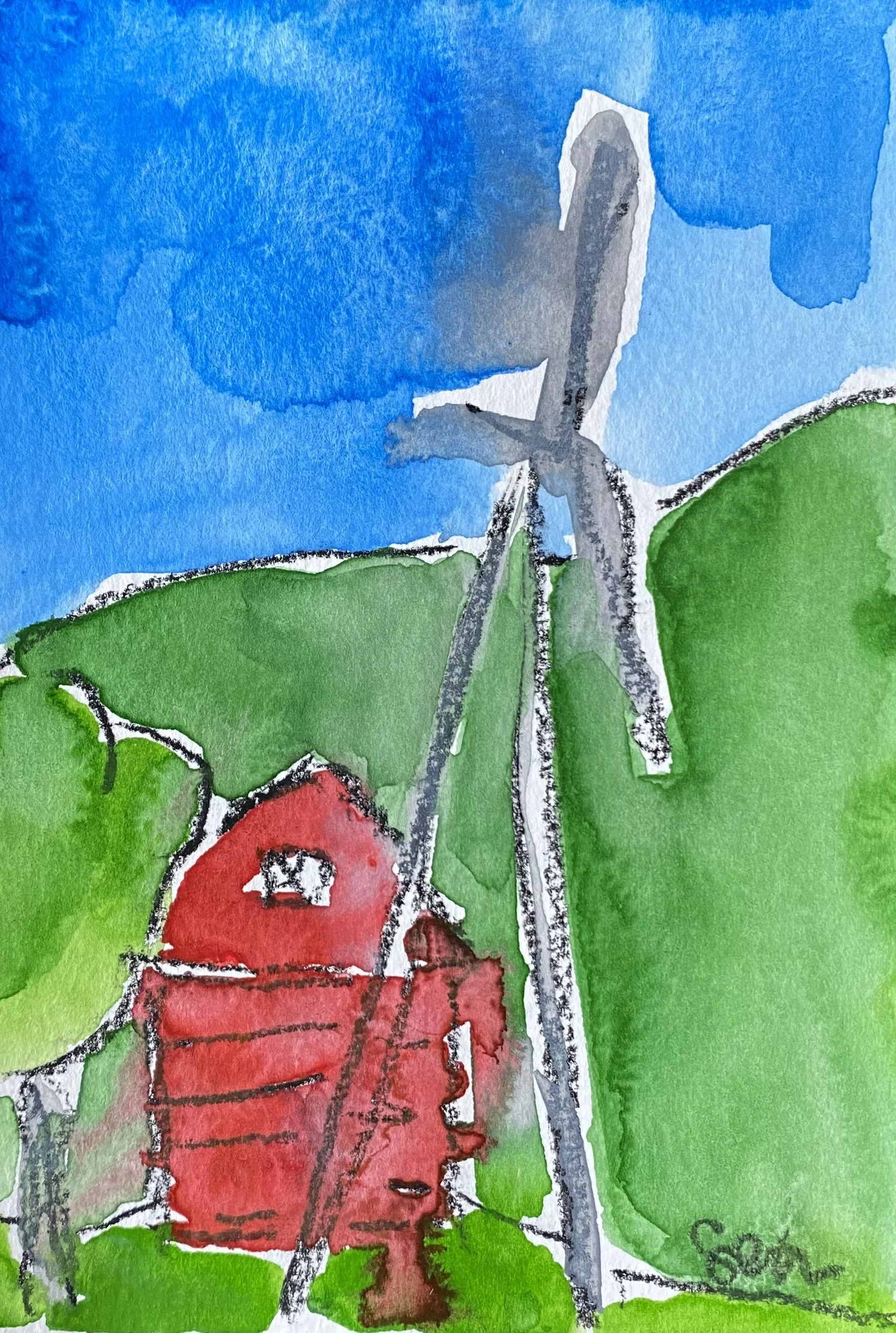
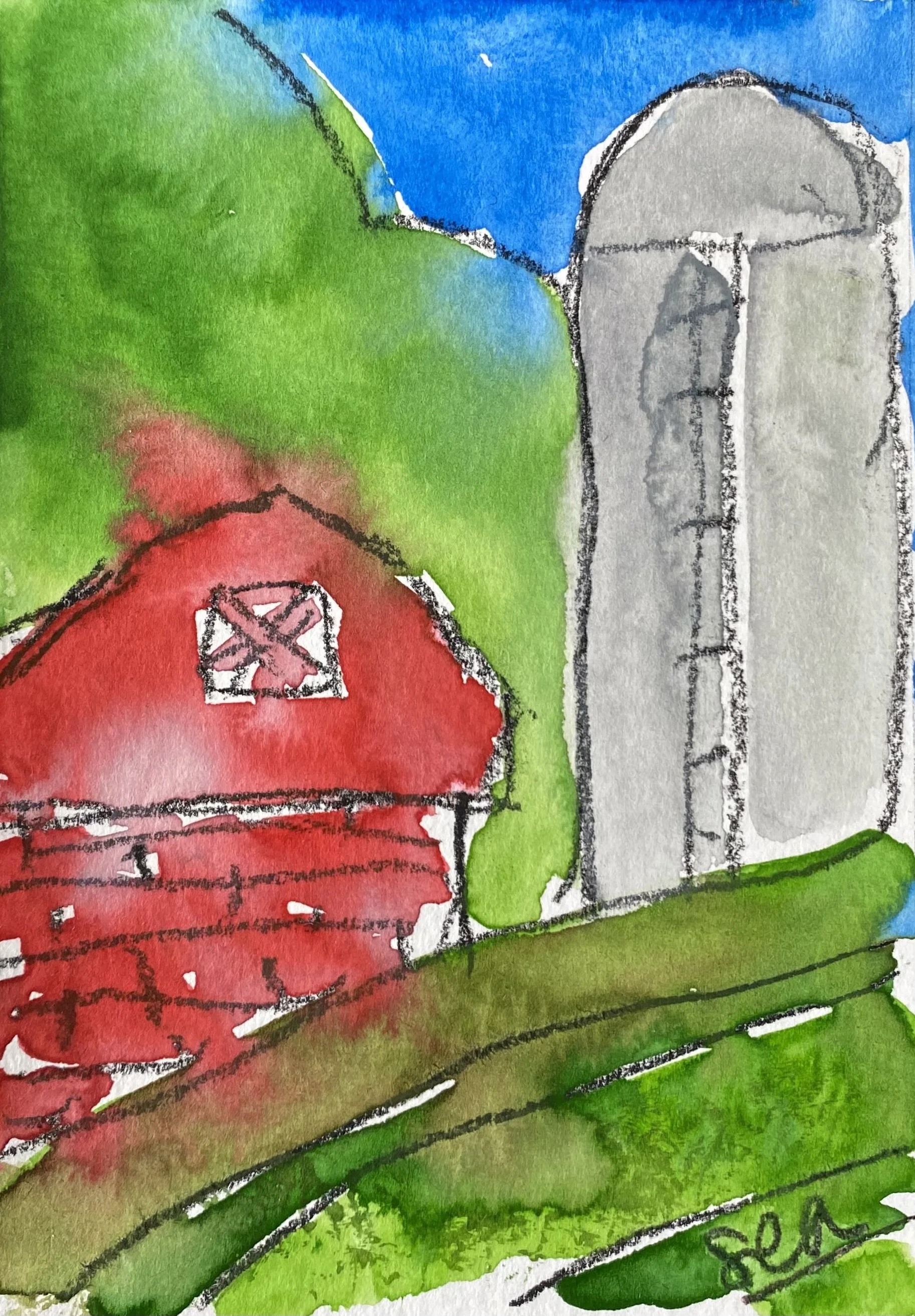
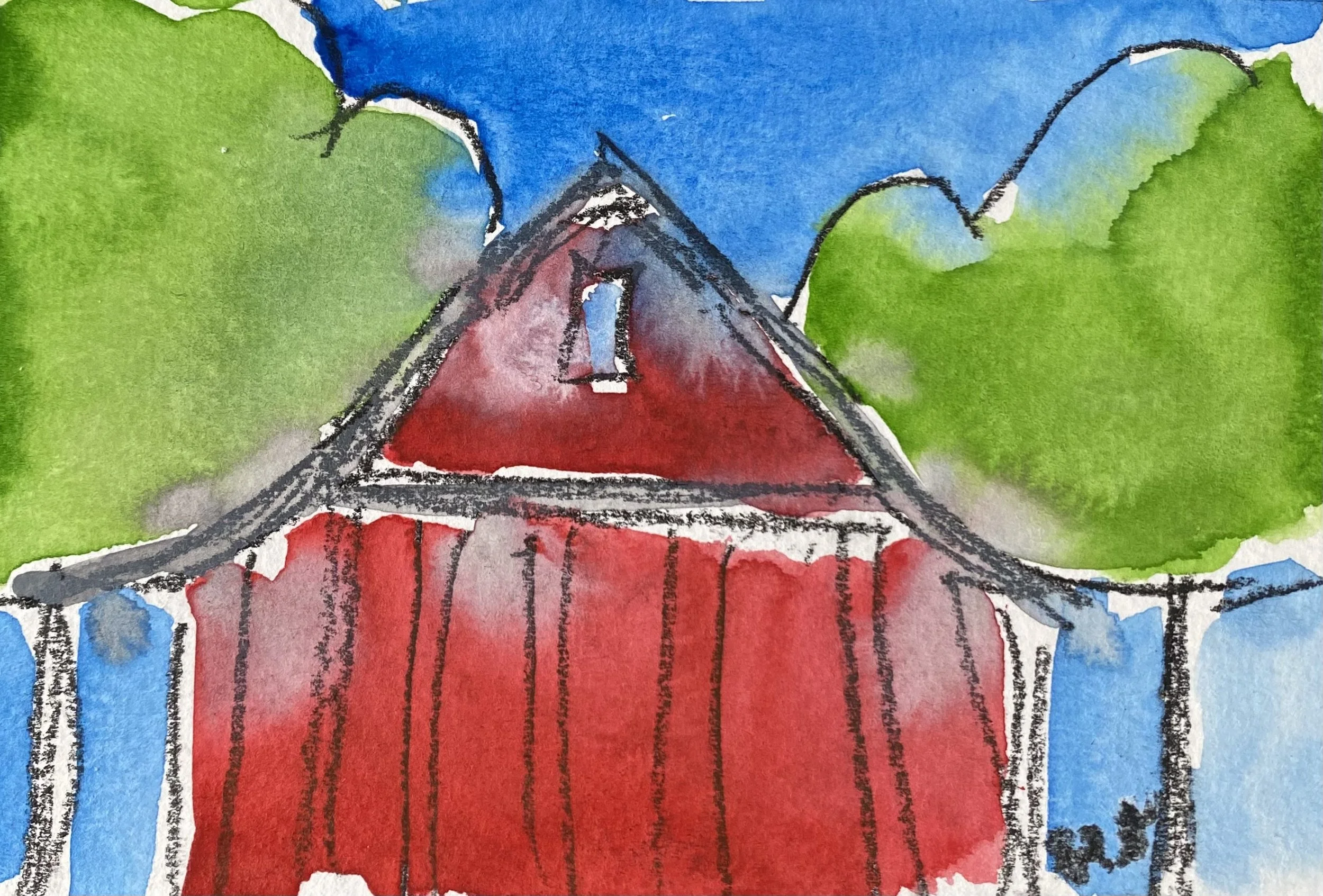
The imprecision of opposite-hand drawing makes simplifying compositions easier, as I can’t pull off the fine details that add complexity. This practice suits the small format art I create which is meant to ride the line between realism and abstraction and is dependent on simplicity. I’ll often make several studies to get a composition right, returning to my sketchbook to make some new line drawings based on what the charcoal and watercolor trials are telling me.
All studies are instructive and inform what comes next, or in some cases what doesn’t come next. This is where the real culling happens. It’s not unusual for compositions I’ve loved as thumbnails to fall apart during the study phase. Alternatively, if the charcoal and paint court me into feeling lovingly possessive of a particular painting, I’ll often stop to pop the painting in a frame, propping it up in front of my worktable for inspiration. I’ve learned that every composition has its place and that an idea will tell me to stop when it discovers where it belongs: existing beautifully as a drawing or painting, maybe never making it to a collage.
No matter how much abundance, there is no escaping preciousness. It’s always lurking in the background waiting for the moment to sneak in. It’s how a piece signals it is finished. And it’s the promise of finding a jewel at this stage that fuels me with the passion I need to keep moving forward, reminding me yet again why I’m an artist.