Cassiopea
Our options were to wait until the sun set, and either take a boat ride and swim in the bay or paddle a kayak and sit in the open water. Neither sounded particularly relaxing, or safe for that matter, but friends spoke of exploring these select, secluded bioluminescent waters off the coast of Puerto Rico, home to three of only five consistently luminous bays in the entire world, to witness the fantastic glow emitted by tiny organisms feeding off the mangroves hunkering at the shore. I committed to the former, with first right of refusal on the latter.
The marketing photography for both excursions was full of glowing water; however, the experts warned we wouldn’t get good pictures without proper equipment and patience, and suggested the phenomenon was best experienced with the naked eye. It took me a beat to get over the fact that I would not be photographing the highlight of our trip. Few activities in life go undocumented anymore; for this I was just going to have to rely on my memory.
Sliding into the warm bay water at La Parguera on a January evening under the waning crescent moon was as unnerving as it was magical. Miraculously there were no mosquitoes. It was just dark enough to detect the glowing speckles triggered by any movement I made, whether it was swimming or treading water. The dots even lingered for a second on my fingers and arms when I lifted them in the air, but their light didn’t travel far, making it harder to see for those who chose not to swim; although a swimmer’s jellyfish sting may have been all the affirmation to stay dry our fellow boaters craved.
For me to see bioluminescence firsthand in the water was a singular, amazing and sparkling experience. And at the same time, it didn’t look anything like the pictures flooding the internet. What the experts failed to explain is that human eyes are unable to see this glow in the same way a camera can. My eyes saw brief flashes of purple-white neon, the color of a clear glowstick moving like reflections off a disco ball. Photography takes these short sparks of light and can process them as continuous, intense, blue light while exaggerating the brightness.
Two days later at Laguna Grande in Fajardo, we suited up for our kayaking excursion in ideal conditions under a new moon. If night swimming hadn’t been so spectacular I might have exercised my right of refusal; it quickly became apparent no amount of instruction prepared me mentally for paddling through a narrow waterway cloaked in mangroves with a chorus of invisible, nocturnal birds and reptiles alongside roughly twenty-five companions possessing wildly varying degrees of skill with an oar. When we finally made it out to the open water of the bioluminescent bay, we were told to take some “free time” to paddle around and have fun. The stars were beautiful but impossible to enjoy as all I could think about was the trip back and how it would be even darker and creepier for our return. When we had finally killed enough time, we were broken into three groups, our kayaks tethered together and a plastic tarp thrown over our heads. We were instructed to splash the water and rave about the glow. Except there wasn’t any glow. Crammed together like sardines, it was nearly impossible to find enough water to make a splash. Most people didn’t realize what was going on, asking if this was it. And honestly, if I hadn’t swum in the bay in La Parguera I would have had no idea either. It was such a letdown.
Marketing collateral of smiling kayakers having the time of their lives surrounded by a steady glow of brilliant, blue water felt like an obvious bait and switch. Yet, my amazing night swimming experience made me forget all about the propaganda that got me to sign up in the first place, begging a question about reality. The naked eye has limitations that cause humans to experience this light show very differently than the camera does. Is one version more real than the other? Is the camera a tool that helps our eyes see more accurately or is it transforming reality into a more enhanced experience? As spectacular as viewing the aurora borealis in the best of conditions is for the human eye, the camera makes it that much more intense and colorful, and in the dimmest conditions literally pulls it out of a hat, surfacing what is otherwise invisible to us.
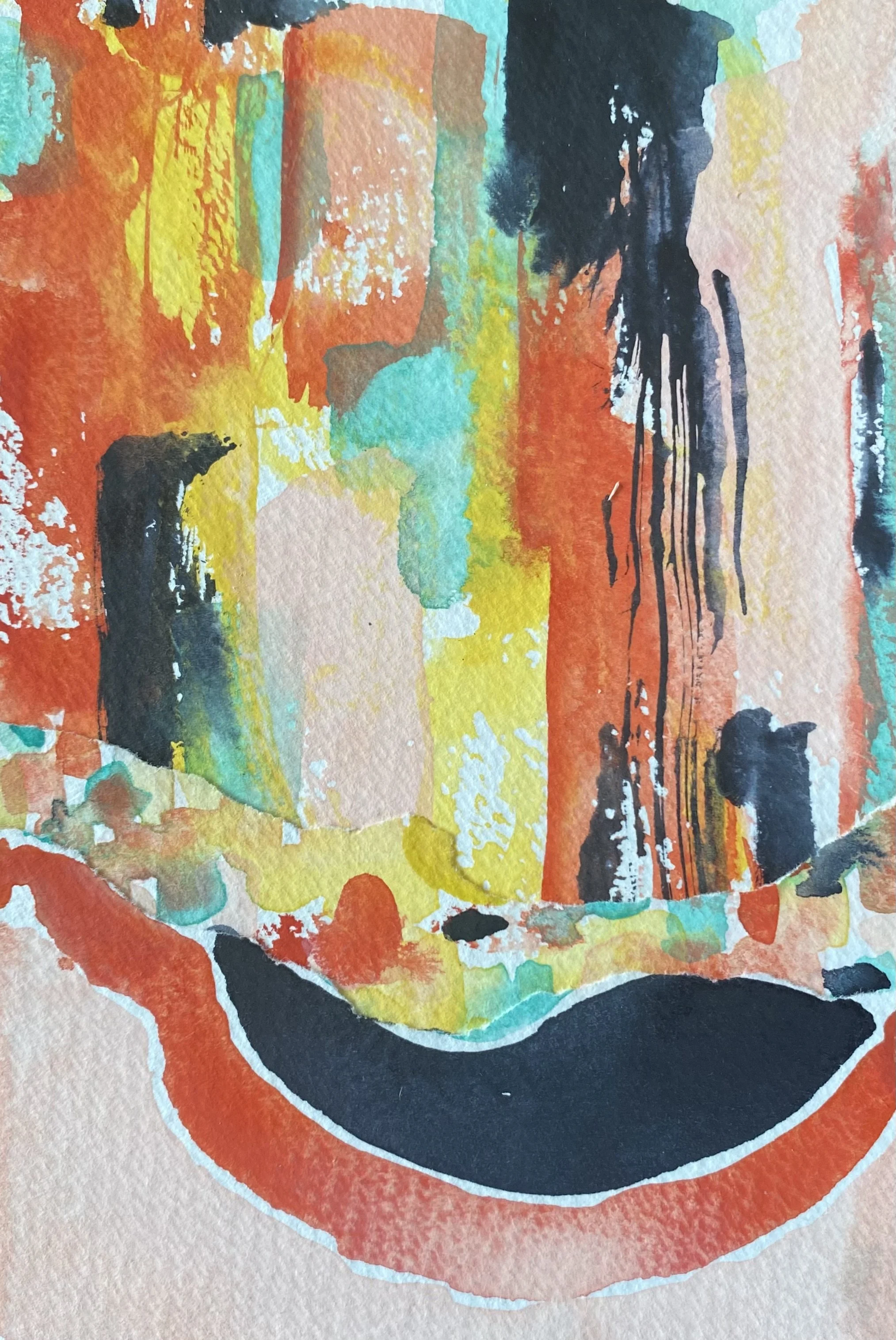
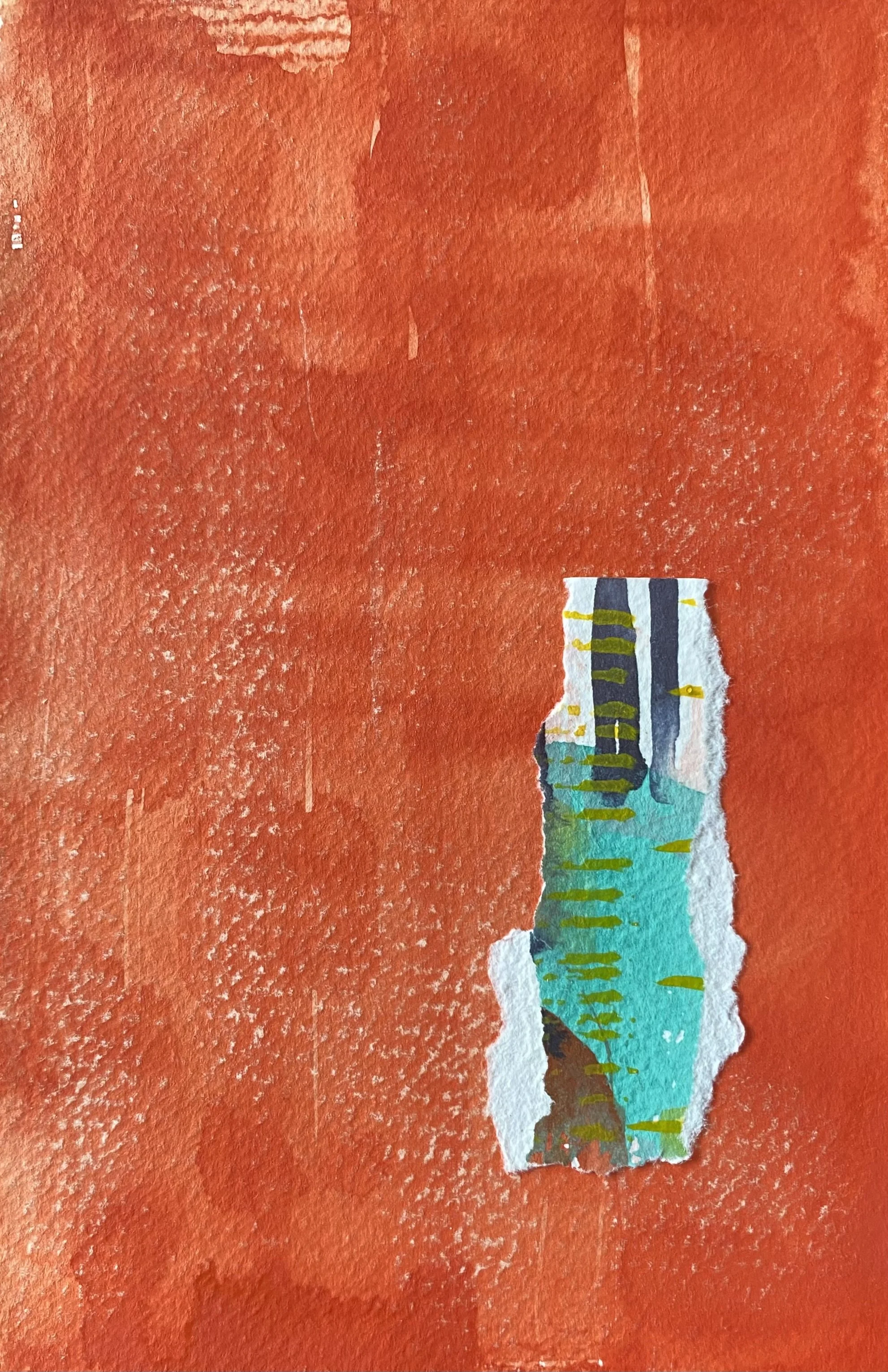
As with much of life, both can be and are true, which brings me to artistic license. Artists routinely wrestle with realism in their work, specifically how many degrees of separation from its inspiration a piece will bear. My collage of the Cassiopea jellyfish, her bell to the sea floor sunning herself upside-down, is screaming with color; nothing like the white one our kayaking guide captured in a jar. Instead I’ve chosen a palette that includes the turquoise, yellow and pink from the shack at the dock where our boat launched because to me it seems infinitely more alluring and expresses the wonder I’m seeking to convey.
In this world of exponential technology, we can no longer expect that artistic license is only reserved for artists. Anyone looking to lure an audience to their product rides our coattails, using an array of tools available to ensure their work shows in the best light possible. And maybe the message for artists to ponder is how this frenzy can further validate the interpretations and iterations of making we regularly employ and fight with ourselves to own when we turn reality into art.